Whygold.
Gold is the only material that is both worn and held. This page is what the numbers on a Panaya tag actually mean — and, just as importantly, what they do not.
Six thousand years, one material.
01
Two things at once
Almost everything in a jewellery box is worth less the moment it is bought. Gold is the exception, and it is the only material that is simultaneously a finished object and a raw commodity.
That is the whole premise of Panaya. You are not choosing between something beautiful and something worth owning — gold has never asked for that trade.
02
Held, not hosted
A physical piece has no account to log into, no platform to trust and no counterparty. It sits in a drawer or on a body, and it is yours outright.
That cuts both ways: it is also yours to store and yours to insure. We will talk through both before anything ships.
03
Priced on an open market
Physical gold is quoted by weight and purity on a global market that runs independently of any single company or currency.
What that price does over time is nobody's to promise — including ours. What we can state precisely is what a piece weighs and how pure it is.
Purity, inplain numbers.
Karat is a ratio out of 24. The three-digit number stamped beside it is the same ratio expressed in parts per thousand — 916 means 916 parts gold, 84 parts alloy.
- 18K750
75.0% pure gold
The hardest of the four. Common in Europe, holds fine detail and stands up to daily knocks.
- 21K875
87.5% pure gold
The Gulf standard. A noticeably warmer colour, still hard enough for a chain worn every day.
- 22K916
91.6% pure gold
Deep yellow and softer to the touch. Traditional for heavier, keepable pieces.
- 24K999
99.9% pure gold
Fine gold. Too soft for most jewellery — this is the form value is held in.
Weight isthe piece.
Every piece is listed with the weight and purity our supplier states, published on the page you are reading rather than hidden.
Two chains can look identical and differ by ten grams. Length, link size and whether the piece is solid or hollow all move the number — and the number is what the gold content is measured against.
If a seller will not state the weight, that is the answer.
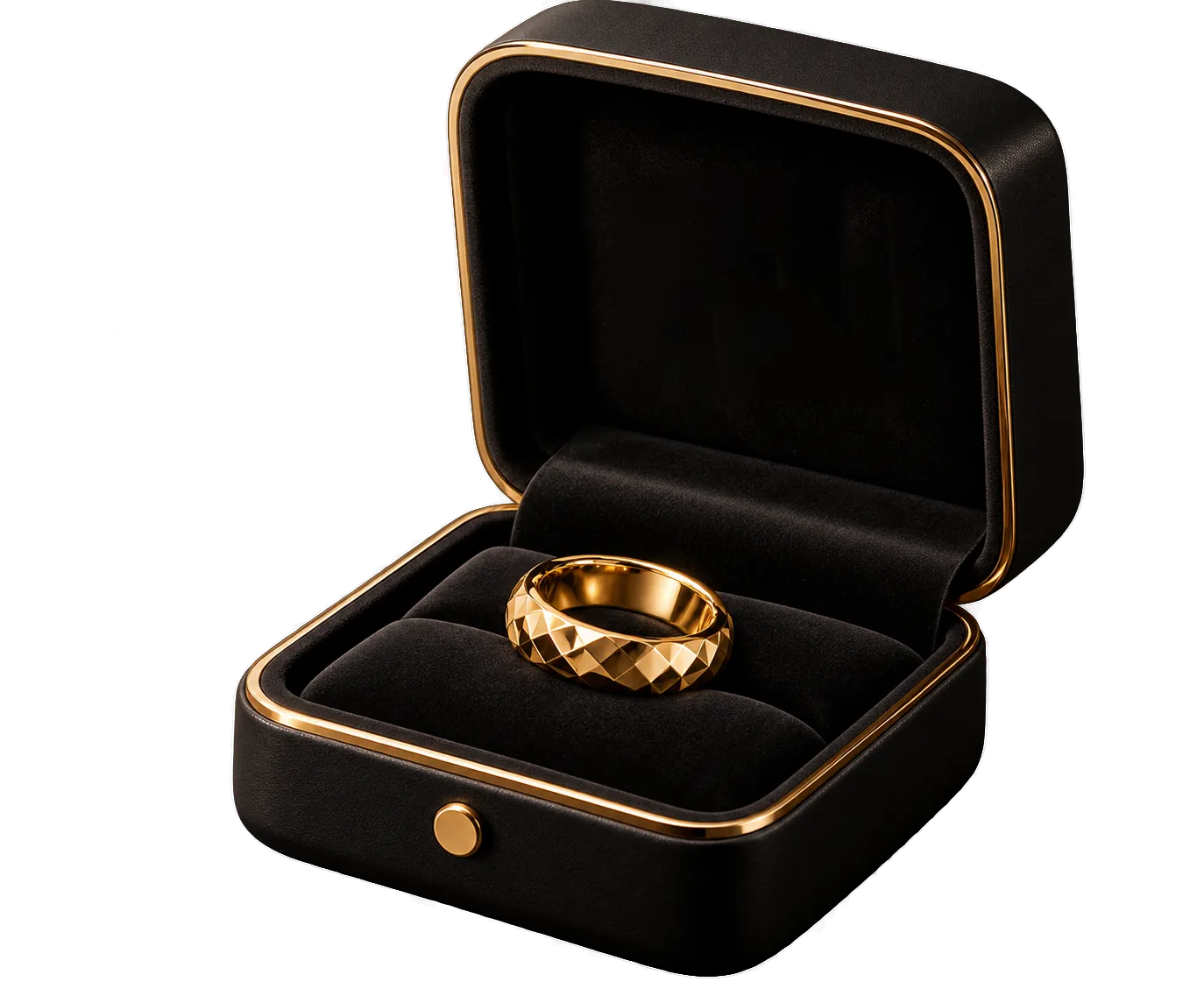
7.3 g
A 22K band
24.8 g
A 21K chain
50 g
A cast bar
Wearing value
A chain does not have to sit in a safe to be worth something. That is the unusual part: the object performs both jobs at the same time, with no compromise to either.
Wear marks a piece. Fine scratches on 21K and 22K are normal, they are the surface settling, and they polish out. Nothing about wearing gold reduces how much gold is there.
Keeping gold
Store pieces separately — gold scratches gold. A soft pouch or the original case is enough; the enemy is other jewellery, not air.
Clean with warm water, mild soap and a soft cloth. Skip ultrasonic cleaners on high-karat pieces. Any jeweller can re-polish a piece when you want the surface back.
Keep the receipt and the reference number. Between them they record purity, weight and provenance.
Important
Panaya Jewels provides product information only and does not provide financial or investment advice.
Nothing on this page is a forecast, a recommendation or a promise about future value. We describe material, purity and weight — the rest is outside our remit and outside anyone's.